»  Support » Pad Printing 101

Pad Printing 101: Back To The Basics

Experienced field technicians frequently visit customers who have transfer pad printing equipment in operation. Many of the questions that they are asked on these visits relate directly to the printing process, such as: “How does the pad pick up the image?” or “How does the ink transfer to the substrate? or “How can a flat artwork conform to a three-dimensional part?” and many others. The best way to answer these questions is to refer to the basic principles of pad printing and then apply these principles in practical ways where they are appropriate.
This article will cover the fundamentals of this unique and flexible decorative process. This first section will include examination of the key components that play critical roles in pad printing.

Introduction To Pad Printing

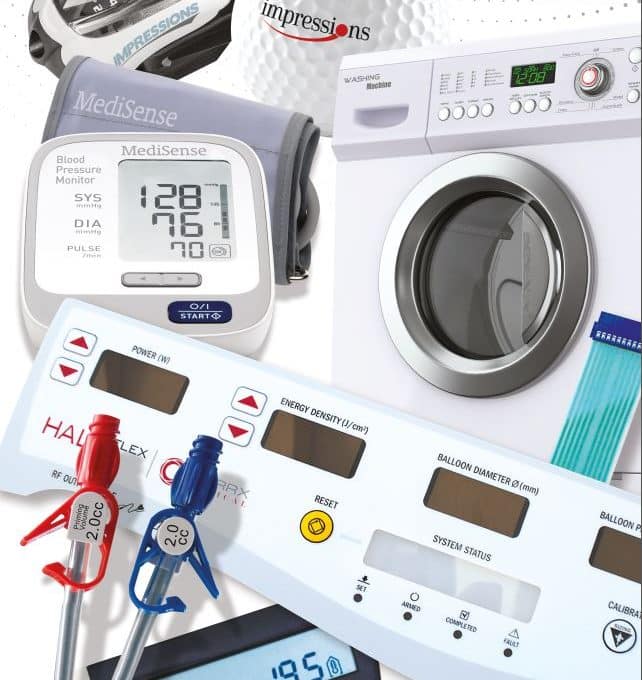
Transfer pad printing is considered an indirect gravure printing process since, like gravure printing, it employs an etched plate. But the plate does not come in direct contact with the substrate. Instead, the image is transferred to the surface by means of the pad. The benefits associated with pad printing are numerous, but it is most commonly recognized for its ability to print on three-dimensional surfaces. Common products that illustrate this feature include golfballs, syringe barrels, windshield wiper knobs, taillight lenses, consumer electronics and many more items.

Basic Elements Of Pad Printing

The transfer pad printing process consists of four main elements: pad, cliché, ink and machine. Below is a brief introduction of the elements followed by a detailed discussion of each.

Silicone Transfer Pad
It was the introduction of the transfer pad in the late 1960s that accelerated pad printing to its current status. The transfer pad, constructed of silicone rubber, is the key ingredient that enables printing on three-dimensional surfaces. Available in a variety of shapes and hardness (durometer), it is the job of the pad to pick up the ink image out of the cliché plate, act as a carrier, and then transfer the image to the part. It is the unique nature of silicone rubber that allows the pickup and release process to occur.  
View Our Pad Printing Pads

Cliché Plate
The second key element that we will look at is the printing plate or cliché. The cliché is manufactured through a special photo-etching process and is available in an assortment of sizes and materials. The most commonly used steel cliché has a life expectancy in excess of one million cycles. Other temporary cliché materials can be used for shorter production runs and can even be manufactured at the user’s facility. The choice between using steel or temporary clichés is based on volume and print quality considerations.
View Our Cliche Plates For Pad Printing

Pad Printing Ink
Pad printing ink, the third key element, includes a wide range of various inks, all designed specifically for the pad printing process. Due to the nature of this process, most clichés are etched to a depth of approximately one thousandth of an inch (.001"). With such an extremely shallow etched depth, the ink deposited within this space must be highly pigmented to obtain the necessary opacity.
Learn More About Our Pad Printing Inks

In addition, thinners are mixed with the ink to control viscosity and to facilitate ink “tackiness”, a critical factor in the image transfer process.

Pad Printing Machine
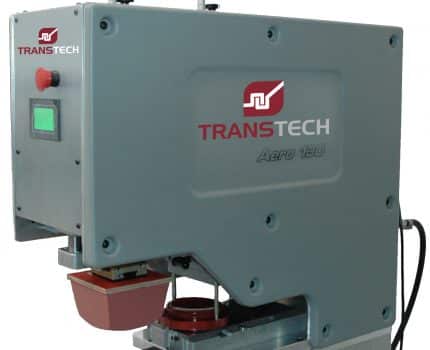
The pad printing machine represents the fourth key element. Many machine designs exist but there are three basic configurations: the conventional open inkwell design, the rotary gravure process, and the sealed ink cup system. As with the other key elements, variations exist within each of these categories. Later in this article we will include comparisons and benefits of each machine and how these variables can be adjusted for decorating an infinite range of shapes, substrates and production demands.
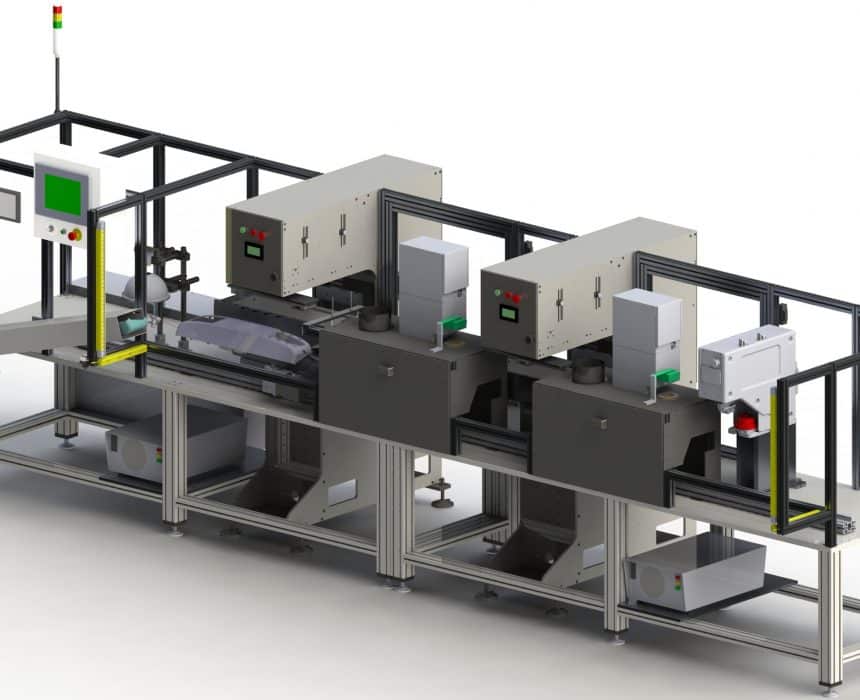
View Our Automated Pad Printing Solutions    |   View Our Pad Printing Machines  

Back To The Top

THE PAD: Shape, Size and Durometer

The silicone rubber transfer pad, developed in the late 1960s, propelled pad printing to prominence as a leading decorative process used in a wide variety of industries. Now let’s discuss what a transfer pad is and how it works. The transfer pad is available in a variety of shapes, sizes and hardnesses. Constructed of silicone rubber combined with silicone oil, the function of the transfer pad is to transfer the image from the printing plate (cliché) to the part. The shape, size and hardness of the pad work in combination to effect the appearance of the printed image.

Although it may not be obvious, there are two basic pad shapes that all transfer pads imitate. The first and most common design is the cone-shaped pad. This shape consists of a pad body with a defined tip. The pad body radiates down and away from the tip at a specific angle. Most rectangular, square and oblong pads utilize this feature.

The second basic shape is commonly referred to as a “V-pad”. The V-pad resembles a rooftop with an apex running the length of the pad. The pad body radiates outward and downward from the apex.
Transfer pads vary dramatically in size. The smallest can weigh a few ounces, while the largest can weigh more than 50 pounds. Pad size is determined by a number of factors, including image area and machine dimensions.
Hardness or durometer is the third key variable in transfer pad design. Most manufacturers offer a variety of durometers to meet the diverse range of pad printing applications. At Trans Tech, five levels of durometer are available. When measured on a 00 scale, durometer ranges from 30 shore to 70 shore with each level progressing at 10 point increments.

Now that we have introduced the basic design features of shape, size and durometer let us evaluate the role these have in pad performance.

Shape
The transfer pad is able to pull the image out of the printing plate due to the ink tack that is created as the cliché is doctored clean. As the pad compresses onto the plate a rolling effect occurs. This rolling action pushes air away from the image. Greater angles of descent enable less air entrapment, resulting in the elimination of pinholes. Conversely, shallow angles of descent prompt air entrapment and will result in the creation of pinholes (see figure at left.). The same principle applies to the action of the pad compressing and then releasing the image onto the part.

For this reason, it is best not to position the image on the tip of the pad. The tip represents a shallow angle of descent. Whether you are working with a cone or v-shaped pad, the image should always be slightly offset from the tip or apex. Transfer pads with highly defined tips and apexes (sharp radius) will provide better print quality than pads with slightly defined tips and apexes (shallow radius).

Size
Sizing a transfer pad to a specific application requires that a sufficient mass of silicone be present to avoid image distortion. As the pad compresses onto the printing plate and part, the print surface of the pad is absorbed into the pad body. The pad body acts as a support mechanism for the pad’s print surface. If the print surface is not adequately supported, it will deform, resulting in image distortion. It may seem that the simple solution is to oversize all transfer pads. However, a few factors need to be considered before making this decision.

First, the transfer pad must fit into the machine. Specifically, it must clear all obstacles that are present (cliché holder, doctor blade holder, ink cup, etc.) during the machine cycle. Secondly, when compressed, the pad must not stretch into the ink buildup that is present on the cliché perimeter. Third, the machine must be capable of compressing the mass of silicone present. If these three criteria cannot be satisfied, then the pad is too large.

Durometer
Transfer pad durometer, or hardness, plays a key role in print quality. Generally, the harder the transfer pad, the better the print quality. A harder pad, when compressed, will maintain its shape much longer than a pad of the same design with a softer durometer. This retention of structure results in a better rolling effect and therefore is less likely to trap air.

Silicone Rubber Formulations
Variations of silicone rubber exist with each one exhibiting a specific performance characteristic. At Trans Tech four qualities of silicone material are available. Our “quality one” material, which has a yellow color, provides the best print image, but is limited in endurance. Our “quality two”, white material, is designed to be chemically resistant, which is not needed in the majority of applications. Our third formulation, “quality three”, is the most commonly used. Pink in color, it provides the best combination of endurance and print quality. Our “quality four” pad, dark grey, is designed to provide antistatic properties. The effect with this material is minimal. The best results are obtained through the implementation of auxiliary antistatic equipment.

Transfer Pad Maintenance
Transfer pad life ranges from 10,000 cycles to 100,000 cycles, depending on the application. The average life cycle is approximately 50,000 imprints. Print surfaces that are flat and free of ridges or protrusions will promote longer life than surfaces that contain these factors. Through extended periods of operation and contact with solvents that are present in ink, the silicone oil within the transfer pad becomes depleted. As the pad dries over time, its ability to pick up and release an image is severely reduced. Proper maintenance of transfer pads can significantly enhance pad life.

One easy step includes the use of silicone oil (Long Life Oil; part # 141112). After each shift, remove the pad from the machine and rub a small dose of oil onto the pad’s surface. Then set the pad onto the shelf, positioned on its base. This will allow the newly applied oil to penetrate the pad body, thereby replenishing the oil that is lost in production.

My second recommendation applies to those facilities that utilize a multishift operation. It is best to alternate pads and not let them be used in consecutive shifts. The combination of applying silicone oil with pad rotation will greatly enhance pad life.

Pad Selection
Now the fun begins! Now that we have reviewed the basic design features, we need to apply them to specific product situations. The first step in choosing the proper transfer pad begins with identifying the desired image size. Most transfer pad catalogs include image size capability with the individual pad illustrations. If the image size is 1” x 4”, then we need to choose a pad that has this capability.
Remember that a pad with the capacity of 2” x 6” is the better choice than a pad with a capacity of 1” x 4”as it will probably be larger and be less likely to distort the image. However, be careful that the pad fits into the machine.

The next consideration will be the part’s surface. Specifically, you will need to know whether the surface is flat, curved, smooth or textured. On a flat and smooth surface, a standard durometer pad may be utilized. If the surface is flat but textured, a harder durometer pad is required. A pad with a harder durometer will do a better job of forcing itself into the bottom of the texture while retaining its basic shape. A softer pad will deform by expanding at the sides and will bridge the texture peaks at the print surface. This will leave a void at the bottom of the texture. If a pad with a harder durometer is unavailable, a pad that utilizes a steep angle will perform the same function.

A part that exhibits a smooth surface, but contains a radius, typically requires the use of a softer durometer. The softer silicone will better conform to the part’s surface. The radius of the part will act to increase the pad’s angle of descent, reducing the potential for pinholes.

Custom Pads
Custom pads are available from most manufacturers and are designed for a specific application. A custom pad may include a void in the center to allow printing on a part like the skirt of a range knob. Other unique designs have been manufactured to allow printing within an electrical fuse block. Custom pads must address the same issues discussed in this section.

Back To The Top

CLICHE: Image, Material & Etch

Webster’s dictionary defines the word “cliché” as a trite phrase or expression. In the pad printing process, however, the term takes on a whole different meaning. In the world of pad printers, a cliché is a printing plate. Now let’s discuss what a cliché is, how it is made and its importance in our overview of pad printing basics. Clichés or printing plates are available in two basic groups: steel and polymer. Within each group, different varieties exist and are used for pad printing, based on production requirements. While the materials used are different among the varieties, all cliché materials share one common feature: they are etched through a photo-etch process. This process requires an artwork in the form of a film positive containing the intended print image.

Artwork
In the photo-etch process, the development of the artwork is the first critical step. The artwork is first created and then converted into a film positive containing the image, full size, right-reading emulsion side down (RRED). Placing the image emulsion side down during exposure allows direct image contact between the film emulsion and cliché surface (see illustration o page five). The purpose of the emulsion is to block light during exposure so that the underlying, sensitized plate material remains soft. The surface exposed to light hardens and will resist the etch process. Given this, it is very important that the emulsion be 100% opaque to block light transfer. Film that is not fully opaque allows light to leak through it and that, in turn, unintentionally hardens the etch area resulting in insufficient etch depth.

Steel Clichés
Experienced product decorators who are familiar with the pad printing process know that the clarity and definition of the print produced is a direct result of the quality of the cliché. When compared to other plate materials, the steel cliché is known to produce the best print quality. This is due to a number of characteristics.

At Trans Tech, we use a steel material that is designed specifically for the pad printing process. The quality of the steel and the method in which it is produced differs significantly from other manufacturers. Our proprietary method of hardening the material is designed to provide a high level of durability. Cliché durability relates directly to good print quality and is the result of four factors: chemical makeup, flatness, hardness and surface finish.

Our steel clichés contain a high level of both chrome and carbon. Both elements provide durability. Once formed and machined to size, the cliché material is precision ground to insure flatness and then hardened through a proprietary process to increase durability. It is then lapped to a surface finish of five microinches (.005 mil). Now, you may be wondering why we go to such extremes to manufacture raw material. One very important reason is that, during the print cycle, a flat, smooth surface promotes good doctoring (removal of ink from the cliché surface). If the surface is rough or warped, a shadowing of ink occurs which can result in unwanted distribution of ink onto the part’s surface.

Upon completing the fabrication of the raw material, the plate is ready for the exposure process. The process used to expose steel clichés is not one that is easily adaptable to a customer’s production facility, due to the chemicals used and expertise needed. The blank cliché is first coated with a photosensitive resist solution. The thickness of this coating is critical and is applied with specialized equipment. Once dried, the film positive is placed onto the coated surface of the cliché, exposed with ultraviolet light and then developed.

The developing process removes the photosensitive emulsion that was not hardened during exposure. An acid resist is then painted onto the cliché surface. Although the photosensitive emulsion contains acid-resistant properties, pinholes in the photosensitive emulsion can result due to dust contamination. The procedure of applying an additional acid resist minimizes the potential for pinholes to occur.
The painting process is a critical quality step that is needed to ensure the elimination of pinholes in the cliché surface. At Trans Tech, we think this step so important that our cliché technicians use a microscope to inspect each cliché they manufacture. Only under this intense scrutiny can we be sure that the cliché surface will be intact and void of pinholes. Upon completion of painting, the cliché is put through a tightly controlled acid etch process.

Unique to pad printing is the amount of ink that is deposited onto the part’s surface. The amount of ink deposited is a direct result of the cliché etch depth. For example, the standard etch depth for machines that use the open inkwell technology is 25 microns (.001"). Notice that depth applies specifically to open inkwell technology. Due to the need for allowing solvent evaporation within the ink, the speed of the machine has a direct correlation with the depth of etch. Machines that use the sealed ink cup technology tend to offer higher rates of speed due to their design. In these instances, cliché etch depth may be adjusted to 20 microns. In the rotary gravure process, where the steel drum rotates at speeds up to 100 rpm, the etch depth may drop to 16 microns. Thus, the intended speed of the equipment definitely plays a role in determining etch depth.
Steel clichés are available in two versions: solid steel and steel foil. A solid steel cliché is ten millimeters thick and is intended for use in long run production operations permitting a life up to 1,000,000 cycles. The .015" thick steel foil cliché shares many of the design characteristics with the solid steel cliché and is capable of a production life up to 100,000 cycles. Both the steel and steel foil cliché are developed through the same etch process.

Steel clichés typically offer the best print image for a number of reasons. The material allows a solid etch depth. A halftone screen is not needed unless special circumstances exist. The solid etch allows a uniform coverage of ink without any dot pattern. Also, the durability of the material provides long runs without surface deterioration.

Polymer Clichés (Plastic Plates)
Polymer clichés, also known as plastic plates, are the second cliché group mentioned at the beginning of this article. Trans Tech has three different varieties available that are easy to make at any customer’s facility. Each variety differs slightly from its counterpart and all are intended for short or temporary production runs.

The first and most popular is the alcohol-washout polymer cliché. Red in color and capable of a production life up to 50,000 cycles, the polymer cliché is composed of an emulsion joined onto a metal backing. This emulsion is .0075" deep and requires a special etching process to insure proper etch depth. The material is actually exposed twice: first with the intended artwork and then with a halftone film. If the etch process was to occur immediately after the first exposure, the still-soft underlying material would etch down to the metal backing. At a depth of .0075", the image would be seven times too deep!

The second exposure utilizes a halftone film that is the means used to control etch depth. The halftone film contains a series of dots (see illustration above). A 300-line, 85% halftone film equates to 300 dots per square inch. 85% refers to the tint (opaque area) of the film and the amount of area available for light to transmit through. In this case 85% of the film is opaque allowing only 15% light transfer. The higher the level of tint, the more the area that is protected from the light, resulting in a larger area of soft material. The larger area of soft material is etched away– therefore, a higher level of tint results in greater ink laydown.
Line screen film is not only used to control etch depth, but may be used for large, bold images. The dot pattern that is created in the image by incorporating the line screen film in the etch process thereby acts to support the doctor blade as it travels over the open area of ink. An improperly supported blade will dip into the image and drag ink out. Halftone films are not limited to Polymer clichés, but may be used in all the types discussed in this article, including steel.

The water-washout Hydro-Foil cliché is designed for production runs up to 10,000 cycles. Its emulsion is softer than its Polymer counterpart and has a thickness of .015". This thickness requires a two-stage exposure process: artwork and halftone film.

The Trans Tech Express-3 water-washout cliché has a life expectancy of 10,000 cycles. It is more expensive than the Hydro-Foil, but is easier to produce. Unlike the Hydro-Foil and Polymer, the Express-3 needs only one exposure. The emulsion is .001" and the etch depth is controlled by this design feature. Using halftone film to control depth is unnecessary.  The cliché plate plays a very important role in the pad printing process. However, there are a number of considerations when determining the correct cliché type to use. The quality of desired prints, combined with the quantity of production required, are the major concerns.

Back To The Top

Pad Printing INKS: Viscosity, Pigment and Adhesion

It is common for those unfamiliar with the pad printing process to refer to pad printing inks as “paint”. The truth is that these inks have very little in common with paint or even other inks, including screen printing inks. The inks that we know and use today are designed specifically for the pad printing process. Although a full line of inks is available for printing on different substrates, all pad printing inks share two common traits: they are solvent-based and contain a special pigment density. We will discuss the importance of these traits in this article.

Ink Viscosity
Unlike other decorative processes, ink viscosity plays a crucial role in the image transfer process. Most manufacturers recommend a ratio of 15 to 20% of solvent to ink, by weight, with the ratio adjustable to environmental conditions. It is the evaporation of the solvent that creates ink tackiness. This allows the image transfer to occur. Without the creation of tack, the transfer pad would be unable to properly function. The ink would either be too wet or too dry, preventing complete image transfer.

Often seasonal changes will affect the actual ratio used. For example, the solvent may flash quicker in winter months, due to the dry air, than in summer when the air is full of moisture. Most printing problems that are reported in the summer relate directly to high levels of heat or humidity. To minimize the effects of weather or other environmental factors, we recommend printing in an air conditioned area.

Given this discussion of solvents in the ink and ever present environmental concerns, we are often asked about the availability of water-based inks. Water-based pad printing inks have never been successful, due to their inability to create sufficient tack within the cycle time of the machine. Conventional solvents are much faster and better suited to the process.

Ink “Flashing” Process
To fully understand pad printing, it is helpful to know how the ink interacts with the other components of pad, cliché and machine. The initial stage of each pad printing cycle begins with the cliché immersed in ink (see diagram below). As the cycle begins, the doctor blade or ink cup cleans the cliché surface and leaves the ink in the image exposed to the air. Upon exposure to the air, the solvent in the top half of the image begins to evaporate or “flash off” and becomes tacky. The transfer pad then compresses onto the cliché image and draws the ink from the etch. The portion of ink that was located at the bottom of the etch is now exposed to air for the first time. As this occurs, the solvent on the bottom half begins to evaporate and the tack process is complete. The image is now ready to transfer.

There are two important conclusions to draw from this description. First, the speed in which solvent evaporates plays a critical role in the process. If the solvent does not evaporate, complete image transfer cannot occur. Secondly, ink cohesion is crucial to remove entirely the ink deposited in the etch. This is the main reason that etch depths rarely exceed 25 microns. It is certainly possible to etch steel or other materials deeper, however the ink will not remain as a cohesive unit, but will separate, resulting in an incomplete image transfer.

Pigment Opacity
You may recall from the discussion of clichés earlier that the etch depth of a standard cliché is 25 microns or the equivalent of .001 inch. From this depth, a layer of ink approximately .0008 of an inch thick is transferred to the part. To maintain good image opacity, the pigment in the ink must be small enough to avoid removal in the plate doctoring cycle.

If you have ever tried pad printing with a screen printing ink and experienced “see-thru” or distorted color (i.e., yellow image on black appears greenish), then poor opacity is the reason. Pigments in screen printing inks are typically not milled to the fine density required to achieve proper opacity for the pad printing process. By contrast, in the screen printing process, opacity is gained through the thickness of ink applied.

Pad Printing Machine Considerations
How do machines affect ink? Machines do not affect ink as much as they affect solvent evaporation. A typical open ink well machine with a cycle rate of 1000 parts per hour will affect solvent evaporation differently than a machine that uses a sealed ink cup that runs at a rate up to 3600 parts per hour. It is safe to assume that the open inkwell machine will require more operator involvement to maintain ink viscosity because the solvent is continuously evaporating. In a closed cup system, the ink and solvent are encapsulated. This retards evaporation.

Speed is another consideration. A machine with a faster cycle rate will not allow as much time for the solvent to evaporate as a machine with a slower cycle rate. This could result in incomplete image transfer due to the lack of time required to create the proper tack. To counter this phenomenon, solvents are available that provide different evaporation rates. A fast evaporating thinner should be used on fast cycling machines, for example.

Single and Two Component Pad Printing Inks
Pad printing inks are available in two basic formats: single-component and two-component. When we speak of two-component inks we are always referring to hardener as the second component.
The task of choosing between the two formats depends on the requirements of the image and the substrate being printed upon. Single-component ink provides the benefit of extended pot life. Often, single-component ink is left in the machine overnight or in preparation for the next work shift. A heat cure is often not necessary because the single component ink will cure at ambient temperature in 24 to 48 hours. Although they are easier to use, single-component inks do not provide the same level of resistance to mechanical abrasion or solvents as their two-component counterparts.

Two-component ink is better suited to applications that require a specified performance. The addition of hardener allows the ink to resist mechanical abrasion and most solvents. It is also necessary to give two-component ink a heat cure. The level of cure roughly corresponds to the amount of heat applied; a general rule of thumb is 350˚F for fifteen seconds to two minutes, depending on the application.
Generally speaking, the phrase “the higher the heat, the better the cure” does apply. The limiting factor in most applications is the melt temperature of the material, since most pigments will remain stable up to 650˚F. Two-component ink will cure at ambient temperature in five to seven days, but if the goal is to maximize performance, a heat cure is recommended.

Cure Versus Dry
It is important to note the difference between the terms “dry” and “cure” as they have two different meanings and should not be used interchangeably. “Dry” simply means dry to the touch. It does not imply that ink is cured. “Curing” means that an ink has undergone a chemical reaction and its physical structure has reached a maximum level of performance.

Adhesion
It is a common misconception that the solvent in the ink is the component that promotes adhesion to the substrate surface. This is not true. The solvent does serve to soften the surface, but the ability to adhere to the surface is strictly a trait of the ink’s chemistry. Earlier, we mentioned that the amount of ink transfer is .0008 inch. It is also important to note that once the ink is fully cured, the thickness is reduced to approximately .0004 inch. The loss or difference is from solvent evaporation.

Various inks are formulated to allow adhesion to different substrates. The ink used to print on polycarbonate may be different from one that is used to print on styrene.

An ink’s ability to adhere to the substrate is a product of two factors: the ability of the ink to cross-link with the intended substrate and surface tension. When an ink is properly matched to a substrate, a chemical cross-link occurs that promotes adhesion. However, in the case of some plastics, the second factor of surface tension becomes problematic.

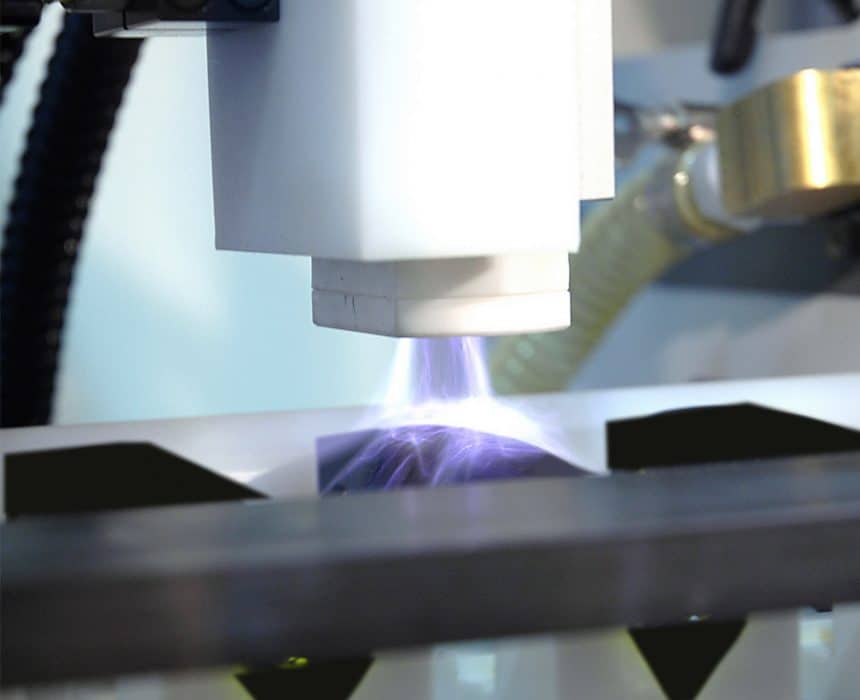
Surface tension, measured in dynes per centimeter, can be described as the “wettability” of a substrate surface. Materials such as polyolefins that have low surface tension do not allow the chemical cross-link to occur. In these instances, pretreatment is required, thereby adding cost to the decorating operation in terms of equipment and labor. Unfortunately, very few inks are available that allow good adhesion to these surfaces without a pretreatment process.

Back To The Top

THE PAD PRINTING MACHINE:

Making The Decision
Purchasing the right machine for your application is simple if you know what to look for. There are three basic technologies available today: open inkwell, closed ink cup and rotary gravure. Now let’s discuss these three pad printing systems and investigate proper machine construction and design.

Open Inkwell Machines
The original open inkwell system is the most versatile of the three machine styles. It is characterized by a cliché holder that uses an open ink reservoir. Common to all machines is the need to flood the cliché image with ink and then “doctor” it clean. An open inkwell machine uses a spatula and doctor blade assembly to accomplish this task. The spatula is the device used to flood the image with ink during the machine cycle. The doctor blade, akin to a razor blade, clears the excess ink from the surface of the printing plate without removing ink from the etched image area. “Doctoring” is the term used to describe this process. The flexibility of this technology stems from the fact that a single open inkwell machine is capable of being outfitted with many different sizes of accessories. For example, our Combi 90 is capable of running with twelve different sets of accessories: 80 by 80mm through 100 by 400mm.

The two major benefits of open inkwell technology are that the machines are flexible in application and economically provide large image capacity. On the down side, however, open inkwell machines have solvent evaporation issues to consider. Due to evaporation, viscosity adjustments are needed to maintain good print quality.

Closed Ink Cup Technology
The closed ink cup system was introduced in the mid-1980’s and has become widely accepted with today’s customers. Its popularity is due to the fact that the ink is encapsulated in an inverted cup that thereby limits solvent evaporation. Unlike the open inkwell machine, the closed ink cup does not require a spatula. The inverted cup is placed directly onto the etched image and gravity helps flood the image with ink. The rim of the cup contains a hardened metal ring that doctors the surface clean.

Today’s machines differ in the methods used to clamp the cup to the cliché surface. The original method of mechanically clamping the cup in position is still used in high-speed machines. The clamp mechanism is complicated in design, but extremely effective in providing the necessary clamping force. Our newly introduced Combi series of printers uses a magnetic hold-down mechanism to secure the cup to the cliché surface. The magnet allows simplification in the machine design with the added benefit of increased flexibility. In the case of the Combi, multiple cups can be used for multicolor applications and extended length images.
Benefits of the closed ink cup technology are numerous, but center on the cup’s ability to sustain constant ink viscosity over long operating periods, thereby increasing output and profitability. The only drawback is that the image must fit within the limited diameter of the cup.

Rotary Gravure System
Rotary gravure technology (also called RTI) is preferred in applications that require printing 360 degrees around a part’s circumference or printing in a continuous motion. The RTI shares many design features with open inkwell technology in that it uses an open inkwell and doctor blade assembly. The printing plate is a cylindrical steel drum that contains the etch on its surface. The silicone transfer pad is in a circular or roll form, typically with an aluminum hub and silicone rubber perimeter.

Both drum and padroll are mounted onto shafts with the drum rotating in one direction and the transfer pad rotating in the opposite direction. As the two items make contact, the transfer padroll pulls the image out of the etch and then deposits it onto the part. This technology, when applied properly, can result in printing speeds of over 2000 parts per minute.

Pad Printing Machine Construction
When making a decision to purchase, machine construction is an extremely important consideration, regardless of the technology required. A well-built machine is designed to produce a quality print on a consistent basis over a long period of time. To accomplish this, certain features need to be present. First, review the construction of the chassis. A well-built chassis will use materials that add structural integrity, reduce vibration and minimize flexing. Open inkwell machines that have large throat areas are best constructed of steel. Aluminum does not provide the same degree of strength.

Look at the machine base, if included. Is the frame constructed from tubular steel or is it bent, sheet steel. A tubular steel construction provides an excellent structure on which to mount the machine. Note the placement and mounting of the key drive components. Are they mounted securely to the chassis or do you see movement in the mounting mechanism? Movement in this mechanism can result in inconsistent print location.

Check to see how motion is controlled. Are positive stops used. If so how are they constructed? The machine should contain two positive stop mechanisms with one used to control motion over the cliché to promote accurate image pickup and the other located over the part to promote accurate image placement. Check the construction of the stop mechanism. A sound design will use a cushion with a shock absorber to minimize vibration. A stop constructed only of aluminum is insufficient and will result in unwanted vibration and premature component wear.

Examine the pad ram. Most ram assemblies consist of two rods, a drive cylinder and a mounting block. The two rods should be mounted in a bearing assembly within the block and be free of movement in any direction except the “Z” axis. Any uncontrolled movement of the rods within this assembly will result in inconsistent image location.

Electronics and Components of a Pad Printing Machine
Once you have completed the mechanical review, investigate machine electronics. Are the functions controlled by a PLC (Programmable Logic Controller) or do a series of relays control the machine functions? A technically superior machine will use a PLC because it offers flexibility and reliability. Plus, a machine outfitted with a PLC is much easier to interface to auxiliary equipment.

Another important point of consideration is the quality of the components used in the construction. Look inside the machine to see if you recognize the manufacturer of the components. Are the air cylinders, sensors and other internal parts from a respected manufacturer? Even on a well-constructed machine, components sometimes fail. A reputable manufacturer offers the security of having parts in inventory for immediate replacement.

Pad Printing Machine Design Details
Scrutinize the design. Specifically, does the machine allow adequate adjustments of those assemblies that effect print quality, that is, the doctor blade and spatula assembly, stroke adjustment and so on. Another feature to examine is the throat area of the machine. Several competitors’ machines ofered to the industry boast large cliché size capacity only to compromise it with insufficient throat area. The pad that would be needed to print an image required by the large cliché cannot fit into the machine.

Finally, pay close attention to the drive mechanism. As mentioned earlier in the “Pad” section, a high-quality print image is obtained by using a pad with a highly defined tip or apex and sufficient hardness. Whether the drive mechanism is pneumatic, mechanical or hydraulic, it must be capable of compressing the mass of pad silicone.

Service Support
Given this limited forum, it is impossible to give a complete analysis regarding the proper machine for every application. But as you evaluate the different machines available, take into consideration the suppliers. Can they support their equipment once it is on your production floor? Will they provide highly trained and experienced personnel to assist you with all of your pad printing questions?

Back To The Top

FINAL EXERCISE

Do You Really Understand Pad Printing?

You should now have a fair understanding of the four basic elements of the pad printing process: pad, cliché, ink and machine. For a final exercise, we will now attempt to take this knowledge and apply it to a typical case study in three-dimensional product decorating.

The particular product we will be decorating is a hand-held remote control (see photo at right) that will require a single color print image in white. The image measures one and one-half by six inches including function icons scattered over the length of the remote with each image adjacent to an opening created for the keypad. The material is ABS and the surface contains a very light texture, dark gray in color.

Production speed will be moderate with a requirement of 400 to 500 parts per hour, one million parts annually. The customer has requested a new machine that uses sealed ink cup technology. Our challenge is to recommend the necessary elements that must be used to successfully print the remote housing.

Transfer Pad
Given the size of the image, it is important to first choose a pad of sufficient mass to avoid image distortion. Consulting the pad catalog, we find a pad that offers a maximum print area of 2.45 by eight inches. However, this pad is too large for the machine that we intend to use to print this part. (Note: Trans Tech could quote a larger machine, but the economics of this particular project do not justify it.) Upon further examination we see that the image is broken down into two distinct groups: one group of images is located at the top of the part and the other is located at the bottom. There is approximately three inches of blank space between the two. The image group at the top covers a square area of 1.75 inches by 2.25 inches. The image at the bottom measures .25 inches by one inch. Again we consult the pad catalog, but instead of looking for one large pad to cover the entire area, we look for two smaller pads.

A common practice used to reduce pad size on larger images is the use of smaller pads mounted to a pad bar. As we search the catalog, we find two pads that fit this need. The first that will print the top portion allows a print image up to three by three inches (#082 in the Trans Tech Pad Catalog). The second pad is smaller and will allow a print image up to one by two inches (#373, page 50). As the surface texture of the part is light, the pad choice does not require a steep angle. We do, however, decide that both pads should have a hardness of 65 shore. This will help the transfer pad to penetrate the texture better. Given all this, our final pad selection is S35082 and S35373. Notice that the digit 5 is underlined. This digit within the pad part number denotes durometer (hardness).

Cliché
Now that the pad has been chosen, we turn our attention to the cliché. We remember that there are several different cliché materials available. As we review our choices, the process of elimination begins. Immediately we eliminate Steel Foil, Polymer, Hydro-Foil and Express-3, since they are not capable of sustaining a production volume of one million parts. Another consideration is the texture of the part. A steel cliché provides a solid etch resulting in a solid layer of ink which will be beneficial in filling the texture. Both the Polymer and Hydrofoil material require a second

exposure process using a halftone film. The result is a dot pattern within the etched area. This is undesirable because it will produce a print image with pinholes caused by the texture. Therefore, our cliché choice for this application is steel. Now that we have made our pad and cliché selection, it is time to turn our attention to ink.

Pad Printing Ink
The decision of which ink to use is one based on the performance requirements of the printed image and the part substrate. As you can see from the photo on page eleven, the function icons are located adjacent to the void that the function button will eventually fill, once the remote is assembled. The actual icons are not operational, however, they are close enough to the button that they will see their fair share of abrasion from operator use. Therefore, the images must be durable.

ABS is an attractive material to print on as it offers sufficient surface tension which promotes good ink adhesion. Ink adhesion is crucial to meeting the requirement of durability. Considering all of this, our selection for this application is a two-component ink that satisfies both the adhesion and durability requirement. Our type B ink which uses BH hardener at a ratio of 4:1 is our ink of choice.

Pad Printing Machine
In choosing the correct machine, a number of issues require consideration. The first major issue has been settled: the customer has requested a machine that uses sealed ink cup technology. The largest sealed ink cup available provides a print image up to 110mm in diameter (4.33 inches). This is not large enough to cover the 1.5 by six-inch area of the entire remote. Another option to consider is the use of two ink cups mounted side by side. In measuring the images, we find that a 90mm cup will print the group of icons at the top of the remote and a 60mm cup will print the image at the bottom.

Our mechanically-driven Sealcup series printers will not work, since they are capable of using one cup only and are dedicated to a specific cup size. Our Combi 90 and Combi 130, however, are designed to be flexible in application and are capable of using two different cup sizes in tandem. By positioning both cups side by side, it is possible to print the remote. Both machines are capable of fulfilling our requirements, so in this instance, we will choose the Combi 90 as it does not cost as much as the larger Combi 130.

Back To The Top

Pad Printing 101 Summary

The pad printing process is not as complicated as it sometimes seems. But by breaking down the process as we have done here, we can understand the components. With practice, you will find that pad printing can be a highly effective and profitable way to decorate three dimensional surfaces. Feel free to contact us at www.itwtranstech.com for help.

Back To The Top

475 North Gary Avenue     Carol Stream, IL 60188-4900
Phone: (630) 752.4000     Fax: (630)752.4460
©Copyright 2010 by ITW Trans Tech